
Rutherford County Criminal Court Cases
Rutherford County is part of Prosecutorial, Superior Court, and District Court District 41. Superior Court is the trial court for felonies. District Court handles misdemeanors and infractions, as well as initial and preliminary felony proceedings. The Rutherford County court office ties those divisions together. The Clerk of Superior Court maintains the files for both. Forest City, Spindale, and Rutherfordton do not run separate municipal criminal courts under North Carolina's state court structure.
The arresting agency may begin the factual trail, but it does not own the court case. Once a charge is filed, the Rutherford County criminal case file can include hearing settings, motions, pleas, court orders, disposition events, judgment, and financial entries. That distinction matters when an initial arrest charge was amended, replaced, or dismissed. The court file shows what prosecutors filed and what the judge ultimately did.
The official courthouse profile shows where those records are maintained.
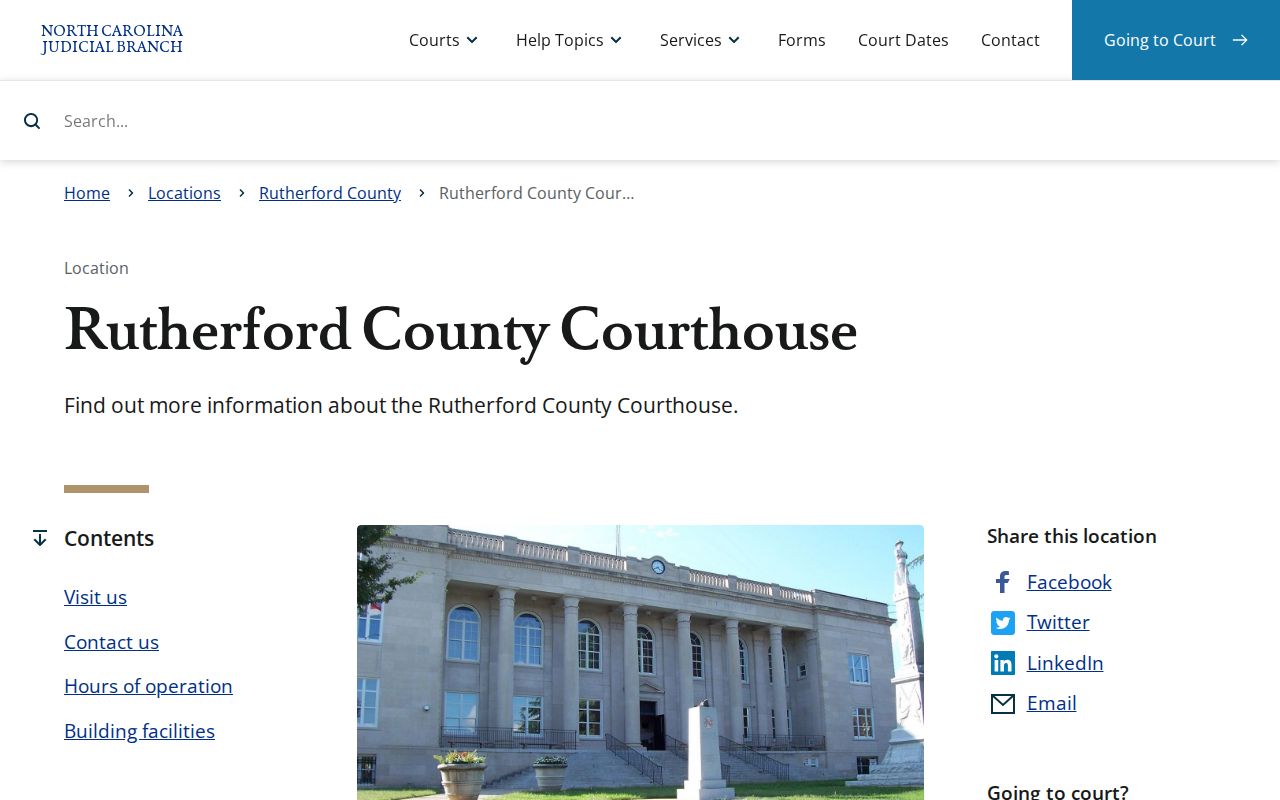
The courthouse remains the physical access point when an online summary cannot answer a Rutherford County case question.
Rutherford County Court 41 Roles
Knowing the court level saves time. District Court judges handle misdemeanor cases and early felony steps, including preliminary matters. Superior Court judges handle felony trials. Magistrates can issue process, conduct initial proceedings, and set release conditions within their authority. The District Attorney for District 41 prosecutes the state's case, while the clerk preserves the official record.
The offices share a court system, yet each has a different job. A caller asking a judge's office to search a file may be sent to the clerk. A city police records unit can provide its own incident report, but not the filed Rutherford County criminal court case. Start with the Clerk of Superior Court for the docket, judgment, certified search, or copy request.
Clerk of Superior Court
229 N. Main St., Suite 203
Rutherfordton, NC
828-288-6100
District Attorney, District 41
Rutherford County Courthouse
Rutherfordton, NC
828-288-6110
The court contact directory is the source for current Rutherford County court contacts.
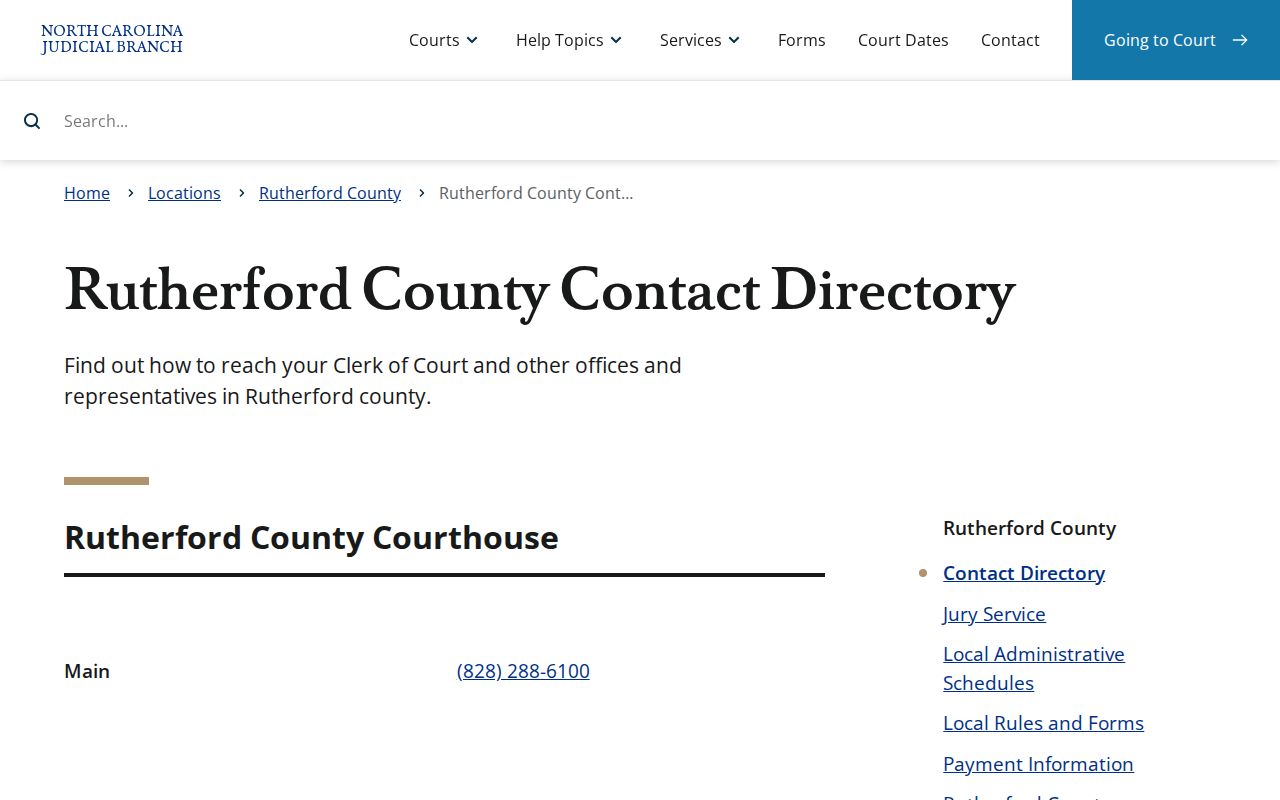
Use the listed clerk number for record custody questions and the proper judicial office only for its stated role.
Searching Rutherford County Case Records
North Carolina eCourts Portal offers free, near-real-time public case information. Search with a case number or party name, then set the location to Rutherford. A narrow result is safer than relying on a same-name match from across the state. The portal is useful, but the Judicial Branch does not describe it as the official certified background-check product.
- Open Smart Search and enter the case number or party name. Select Rutherford as the location.
- Use the available file-date, status, or criminal case-type filters to narrow the list.
- Match the case number, court location, filed date, and lawful identity details before opening the result.
- Read Case Summary and Register of Actions together. Check each charge and its own disposition.
- Ask the clerk for the underlying file, a certified copy, or the certified single-county search when the public summary is not enough.
The Portal training resources explain Smart Search and hearing workflows.
Those instructions help readers use wildcards and filters without treating a broad name result as a verified match.
| Field | Type | Required | Format or use |
|---|---|---|---|
| Smart Search | Text | Yes | Case number, party name, or another indexed value |
| Location | Filter | No | Select Rutherford to cut same-name results elsewhere |
| Case type and status | Filters | No | Narrow to the criminal category and active or disposed cases |
| File date | Date range | No | Limits the filing period |
| Case number | Text | No | Use four or more characters plus * for a wildcard |
| Last and first name | Text | Conditional | Last name needs three characters plus *; first name needs one plus * |
| Hearings | Separate search | Varies | Search by case, party, attorney, judicial officer, or courtroom |
Decode Rutherford County Case Numbers
Enterprise Justice case numbers combine a two-digit year, case-type letters, a six-digit sequence, and a three-digit county identifier. An official statewide example follows the pattern 21CR000003-910. The letters and digits are not a statement of guilt. They identify the file and help the clerk locate it.
Use the full number when it is known. If a notice shows only part of it, Portal training permits a case-number wildcard after at least four characters. Name wildcards also work, but they can return several people. Confirm Rutherford County, the case type, and the filed date before reading the docket. A case number is a much stronger retrieval key than a common name.
Note: A hearing search reports a scheduled event, not proof that the hearing occurred or that the case reached a disposition.
Inside a Rutherford County Case File
A public Rutherford County criminal case summary centers on the prosecution filed in court. It may show the court and status, the State and defendant, attorneys when public, charges, hearings, docket events, charge-level outcomes, judgment, and assessed financial obligations. Download access varies by document and permissions. The register can list an event even when the actual filing is not downloadable.
| Case number and court | Identifies the Enterprise Justice file, location, court type, filed date, and status. |
|---|---|
| Parties and assignment | Shows the State, defendant, attorneys, and judicial assignment where public. |
| Causes or charges | Lists the description, statute or code, and class as entered. |
| Register of Actions | Chronologically lists filings, service, settings, pleas, orders, judgments, and disposition events. |
| Hearings | May list date, time, courtroom, and judicial officer for scheduled proceedings. |
| Disposition and judgment | Shows outcomes and dates; different charges in one case may end differently. |
| Financial data | Shows assessed obligations and payment status to the extent made public. |
For guidance on public files and copies, the Judicial Branch publishes an official court-record access page.
That route is useful when the docket points to a judgment or order that must be obtained from the clerk.
Rutherford Case Summary Versus Docket
Case Summary is the quick snapshot. It can show assignment, parties, charges, status, hearings, disposition, and finances. The Register of Actions is the timeline. It records filings and court events in date order. Read both because a status label alone can hide the path that produced it.
“Disposed” means the court ended the case or charge. It does not always mean guilty. One charge may be dismissed while another ends in conviction. A setting can be continued. A plea can resolve fewer charges than the original filing listed. For a result that must be exact, request the judgment or a certified result from the clerk rather than inferring the outcome from one screen.
- Disposition
- The recorded outcome for a charge or case.
- Register of Actions
- The dated event list; an entry is not always a downloadable document.
- Dismissal
- A charge ended without conviction, though the record does not vanish by itself.
- Arraignment
- A proceeding in which the charge and plea are addressed.
How a Criminal Case Moves
A Rutherford County criminal court case can begin with arrest or summons and an initial appearance. Felony matters may then pass through probable-cause or indictment steps before arraignment where required. Pretrial motions and talks follow. The matter ends through a plea or trial, a charge-level disposition, judgment and sentence, with an appeal possible afterward.
Case flow: Charges Filed → Arraignment → Pretrial → Plea or Trial → Disposition → Sentencing
The sequence explains why a booking label is not the last word. Prosecutors can amend, dismiss, or replace an arrest charge. For Rutherford County case research, compare the original charge with the final charge-level outcome and judgment.
Certified Rutherford Court Record Options
Portal access is free, but two clerk routes answer needs the web view cannot. Anyone may request a certified single-county criminal record search for oneself or another person with form AOC-CR-314. The published fee is $25. Mail payment uses certified check or money order. In-person payment may include cash or card under the Judicial Branch instructions.
The public computer at the clerk's office permits a free, noncertified county or statewide search. It is also the sensible fallback for older or not-fully-online material. Ask for the file by case number. Printing and certification can cost extra, so confirm the current amount before ordering.
The county joined the statewide Enterprise Justice system as eCourts expanded to every North Carolina county. The official rollout announcement documents Rutherford County's move.
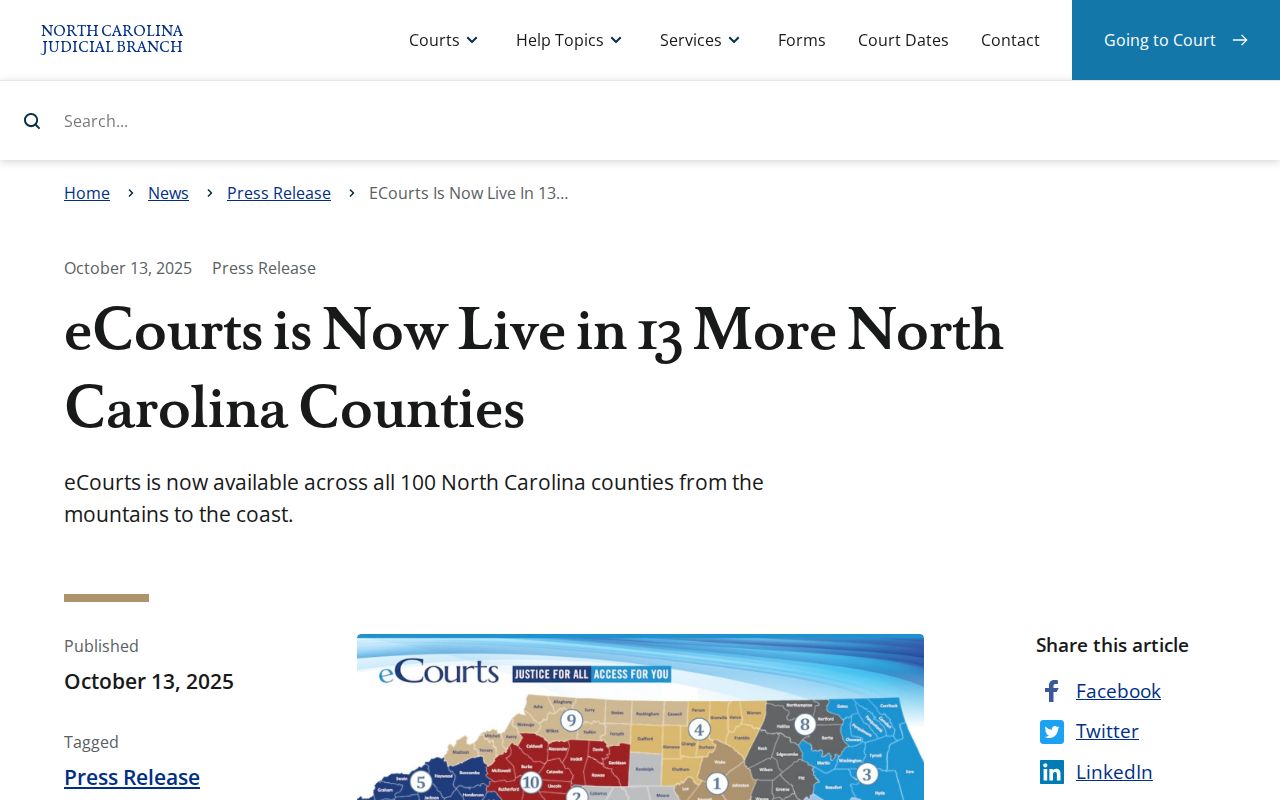
Older paper and archived material still may require the clerk, despite the statewide electronic rollout.
Missing Rutherford Criminal Case Records
A failed name search does not prove that no Rutherford County criminal court case exists. Check spelling, aliases, file dates, and the Rutherford location filter. Try the complete case number if available. Reporting lag, a name variant, an older paper file, or limits on public online display can all change the result.
If the file remains absent, use the courthouse terminal and ask the clerk about archived or paper material. Bring the case number, approximate year, and party name. City police cannot supply the court docket. The arresting agency holds its report, while the clerk holds filed charges and outcomes. Those related records are not interchangeable.
For an arrest that has not yet produced a filed case, follow the custody and agency channels described in the Rutherford County arrest lookup. Return to the court system once charges are filed.
Case Record Access & Restrictions
North Carolina G.S. 7A-109 governs inspection and copies of records in clerks' custody, subject to law and court rules. Public access does not mean every field or filing appears online. Sensitive identifiers, victim or minor information, juvenile material, expunged or sealed records, and other protected content can be withheld or redacted.
The public-record framework also does not require an office to create a new report. Ask for an existing docket, judgment, order, or certified search. When part of a document is protected, request the public portion. The clerk can explain the available record format, but the office does not have to answer open-ended research questions.
The court-record access statute provides the controlling source.
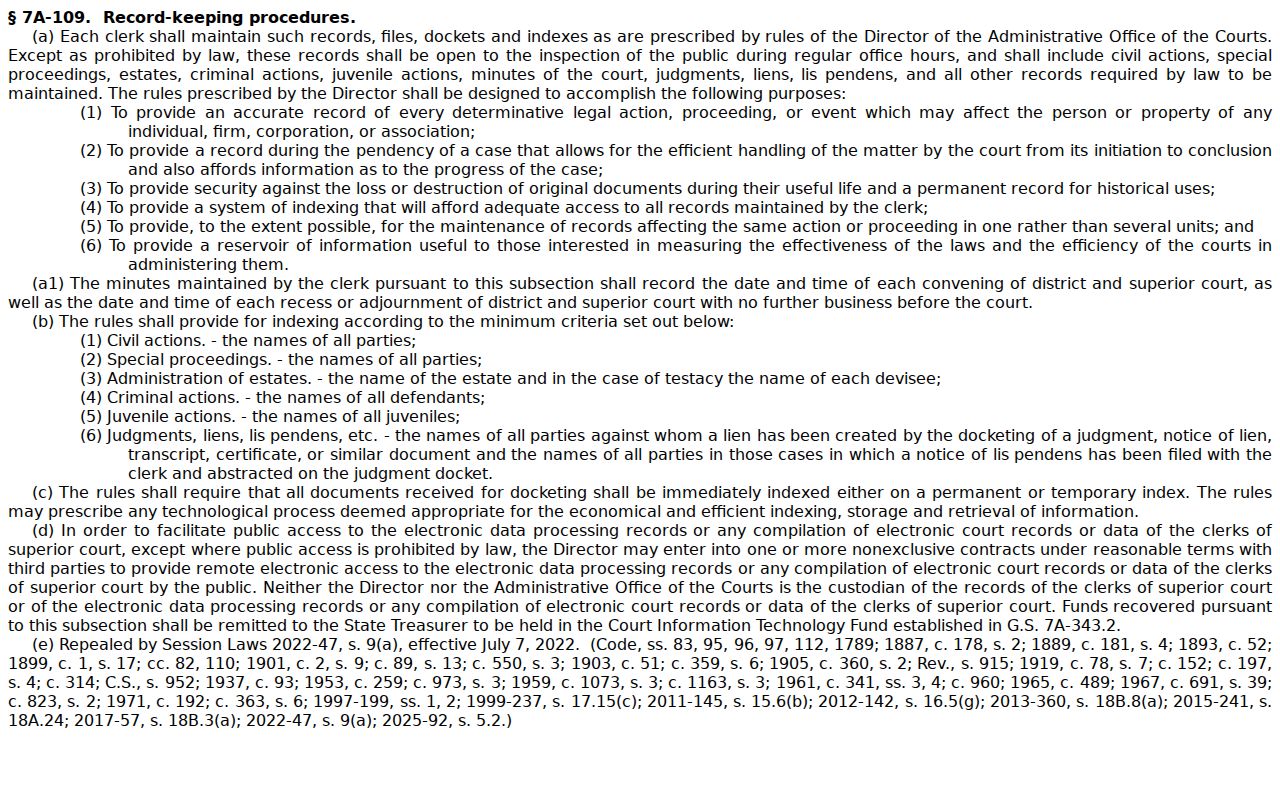
Direct review of the statute helps separate ordinary clerk access from information protected by another law or court rule.
Note: Expunction follows statute-specific rules, and a record missing from the public portal should never be assumed erased.